
-
이메일 문의
- 주요 보고서
Beyond the Gym: How Sports and Physical Activity Are Evolving Worldwide Through 2027
게시일 18 June, 2026
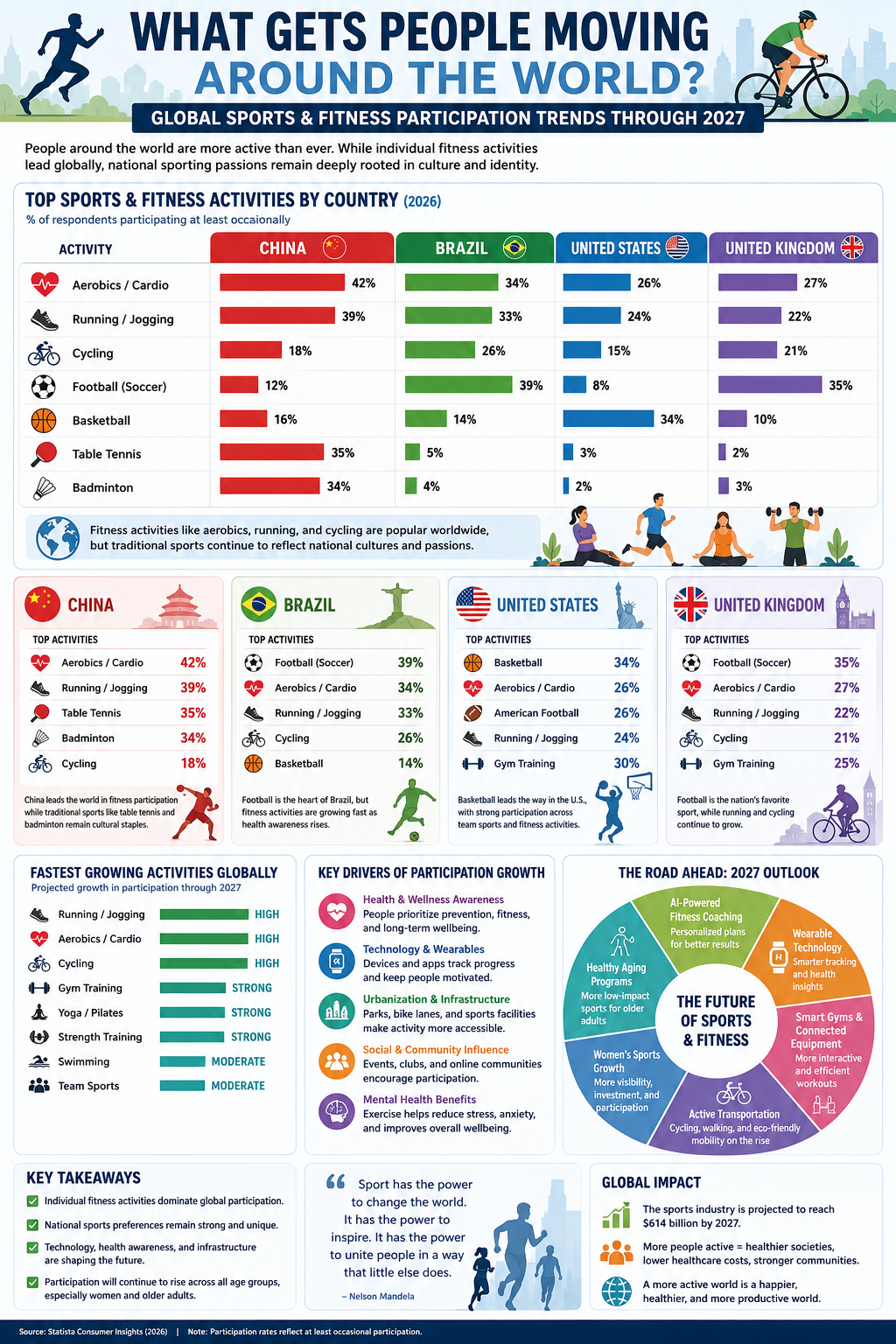
United States: A Diverse and Evolving Sports Landscape
The United States possesses one of the most diversified sports ecosystems in the world. Unlike many countries where a single sport dominates participation, Americans engage in a broad spectrum of activities ranging from organized team sports to individual fitness pursuits. Basketball remains the most popular traditional sport with participation reaching approximately 34 percent. Its popularity stems from accessibility, relatively low equipment requirements, strong school and collegiate programs, and the global influence of professional leagues. Basketball courts are widely available in parks, schools, and recreational centers, making the sport accessible to participants from various socioeconomic backgrounds.
American football continues to hold a powerful position within U.S. culture, with approximately 26 percent participation. Although concerns regarding player safety and concussion risks have increased public awareness, football remains deeply connected to educational institutions, community traditions, and professional entertainment. Youth leagues, high school competitions, and college football programs continue serving as major drivers of participation and fan engagement.
Fitness-oriented activities have also become increasingly important. Approximately 26 percent of Americans regularly participate in aerobics or cardio-based exercise programs. The expansion of gym chains, boutique fitness studios, home workout platforms, and wearable technology has transformed how Americans approach physical activity. Many consumers now view exercise as a daily wellness practice rather than solely a recreational activity.
The rise of connected fitness ecosystems has further accelerated participation. Smart fitness equipment, virtual coaching, AI-powered workout plans, and fitness tracking applications allow individuals to personalize their exercise experiences. Consumers increasingly monitor heart rate, sleep quality, calorie expenditure, and recovery metrics as part of comprehensive health management strategies.
The American sports market is also characterized by innovation. New fitness trends frequently emerge from the United States before spreading globally. High-intensity interval training (HIIT), CrossFit, functional fitness, obstacle course racing, and connected fitness platforms all gained substantial momentum through American consumer adoption. Looking toward 2027, the United States is expected to remain a leading driver of sports innovation, fitness technology development, and wellness-focused participation growth.
United States Sports Participation Overview
| Activity | Participation Rate |
| Basketball | 34% |
| Aerobics/Cardio | 26% |
| American Football | 26% |
| Running/Jogging | 24% |
| Gym Training | 30% |
| Cycling | 15% |
| Swimming | 14% |
United Kingdom: Tradition Meets Active Living
The United Kingdom combines centuries-old sporting traditions with rapidly evolving fitness behaviors. Football remains the country's most popular sport, attracting approximately 35 percent participation. The sport's influence extends from grassroots community clubs to globally recognized professional leagues. Football serves not only as a recreational activity but also as a powerful social and cultural institution that connects communities across the nation.
In recent years, fitness participation has expanded considerably throughout the United Kingdom. Approximately 27 percent of respondents participate in aerobics or cardio activities, reflecting growing public awareness of physical health and wellness. Government campaigns promoting active lifestyles have encouraged citizens to integrate exercise into their daily routines.
Cycling represents another significant component of British physical activity. Around 21 percent of respondents report regular participation in cycling activities. Investments in cycling infrastructure, dedicated bike lanes, and active transportation initiatives have contributed to rising participation levels. Cities such as London, Manchester, Bristol, and Cambridge have increasingly prioritized cycling as both a recreational and transportation solution.
Running has also experienced remarkable growth across the United Kingdom. Parkrun events, charity races, half marathons, and full marathons attract millions of participants annually. The accessibility of running makes it particularly appealing to individuals seeking affordable and flexible exercise options.
Looking ahead to 2027, continued investments in public sports facilities, active transportation networks, and community wellness programs are expected to support further growth in sports participation throughout the United Kingdom.
United Kingdom Sports Participation Overview
| Activity | Participation Rate |
| Football | 35% |
| Aerobics/Cardio | 27% |
| Running/Jogging | 22% |
| Cycling | 21% |
| Gym Training | 25% |
| Swimming | 12% |
| Tennis | 10% |
The Global Running Revolution
Running has become one of the most universally practiced forms of physical activity worldwide. Its growth reflects a combination of affordability, accessibility, health benefits, and technological support. Unlike many sports that require specialized equipment, facilities, or teams, running can be performed almost anywhere with minimal investment.
Participation rates continue increasing across developed and emerging economies. Urban parks, recreational trails, city streets, and athletic tracks provide countless opportunities for runners to engage in physical activity. Running appeals to individuals seeking cardiovascular health improvements, weight management, mental wellbeing benefits, and social interaction through running clubs and events.
Technology has transformed the running experience. GPS-enabled smartwatches, mobile fitness applications, virtual races, and online communities provide runners with performance insights and motivation. Participants can track pace, distance, heart rate, calories burned, and training progress while connecting with global networks of fellow runners.
The expansion of marathon events has further contributed to participation growth. Major city marathons now attract tens of thousands of participants while generating significant tourism and economic activity. Recreational runners increasingly view completing organized races as personal achievements and lifestyle milestones.
By 2027, global running participation is expected to continue growing as governments, healthcare organizations, and fitness companies promote running as a cost-effective solution for improving public health outcomes.
Global Running Participation Drivers
| Driver | Impact |
| Low Cost | High accessibility |
| Minimal Equipment | Easy entry |
| Health Benefits | Strong motivation |
| Technology Integration | Increased engagement |
| Community Events | Social participation |
| Flexible Scheduling | Convenient exercise |
The Worldwide Cycling Boom
Cycling has emerged as one of the fastest-growing physical activities globally. What was once primarily viewed as a transportation method has evolved into a major recreational and fitness activity. Countries throughout Europe, Asia, and Latin America have invested heavily in cycling infrastructure to support both sustainable transportation and public health objectives.
Cycling offers numerous advantages. It improves cardiovascular fitness, strengthens muscles, reduces transportation costs, and contributes to environmental sustainability. Unlike high-impact activities, cycling is suitable for participants across a wide range of age groups and fitness levels.
The rapid adoption of electric bicycles has further expanded cycling participation. E-bikes reduce physical barriers associated with long distances, steep terrain, and aging populations. Older adults, commuters, and beginner cyclists increasingly utilize e-bikes as part of active lifestyles.
Cities worldwide are redesigning urban environments to accommodate cyclists. Dedicated bike lanes, bike-sharing programs, and cyclist-friendly policies have encouraged participation while reducing dependence on automobiles. These investments support broader sustainability and public health goals.
Through 2027, cycling is expected to remain one of the fastest-growing forms of physical activity, particularly as governments pursue climate goals and promote active transportation initiatives.
Leading Markets for Cycling Growth
| Region | Growth Drivers |
| Europe | Infrastructure investment |
| China | Urban mobility |
| Brazil | Recreational fitness |
| United Kingdom | Cycling lanes |
| North America | E-bike adoption |
Technology Is Reshaping Physical Activity
Technology has fundamentally transformed how people engage with sports and fitness. Modern participants increasingly rely on digital tools to guide workouts, monitor progress, and maintain motivation. Fitness tracking devices have become mainstream, enabling users to collect detailed information about physical performance and health indicators.
Wearable devices provide real-time monitoring of heart rate, sleep quality, calorie expenditure, recovery status, and daily activity levels. This information empowers individuals to make data-driven decisions regarding exercise routines and wellness practices.
Artificial intelligence represents the next major phase of fitness innovation. AI-powered coaching platforms can analyze user performance and generate customized workout programs based on goals, fitness levels, and health conditions. These systems continuously adapt training plans as users progress.
Virtual fitness experiences have also gained popularity. Consumers increasingly participate in online workout classes, digital coaching sessions, and immersive fitness environments. These solutions provide flexibility while maintaining professional guidance and community engagement.
The global sports technology market is projected to expand significantly through 2027 as consumers seek increasingly personalized and connected fitness experiences.
Fitness Technology Adoption Trends
| Technology | Adoption Trend |
| Smartwatches | Rapid growth |
| Fitness Apps | Mainstream |
| AI Coaching | Emerging |
| Connected Equipment | Expanding |
| Virtual Classes | Growing |
| Recovery Technology | Increasing |
Youth Participation and the Future of Sports
Young people remain essential to the future growth of sports participation worldwide. However, youth engagement patterns are evolving in response to changing lifestyles, technology usage, and educational priorities. Traditional team sports continue attracting millions of participants, but many young individuals increasingly favor flexible and personalized physical activities.
Schools continue serving as primary gateways to sports participation. Physical education programs, extracurricular athletics, and community sports clubs introduce children to a variety of activities. Early exposure significantly influences lifelong exercise habits.
Digital technologies play an increasingly important role in youth engagement. Fitness applications, gaming-inspired exercise platforms, and wearable devices help make physical activity more appealing to younger generations. Hybrid experiences that combine technology and exercise are becoming particularly popular.
Governments and educational institutions recognize the importance of maintaining youth participation levels. Rising concerns regarding sedentary behavior, screen time, and childhood obesity have encouraged investment in sports programs and active lifestyle initiatives.
By 2027, youth sports participation strategies are expected to focus increasingly on enjoyment, inclusion, mental wellbeing, and lifelong engagement rather than solely competitive achievement.
Women's Participation Continues to Rise
One of the most important developments in global sports participation is the growing involvement of women across nearly every activity category. Increased visibility of women's professional sports, improved access to facilities, changing social attitudes, and targeted investment programs have contributed to significant growth in female participation.
Women increasingly engage in fitness activities such as running, cycling, strength training, yoga, swimming, and organized sports. Female-focused fitness communities and digital wellness platforms have created supportive environments that encourage participation.
Professional women's sports have also gained unprecedented visibility. Increased media coverage, sponsorship investment, and audience growth have inspired greater participation among younger generations.
The economic impact of women's sports is becoming increasingly significant. Sports apparel companies, fitness brands, equipment manufacturers, and event organizers are expanding offerings designed specifically for female consumers.
By 2027, female participation growth is expected to remain one of the most influential trends shaping the global sports industry.
Health and Wellness as Major Participation Drivers
The relationship between physical activity and health outcomes has become one of the strongest drivers of sports participation globally. Governments and healthcare organizations increasingly recognize exercise as a critical component of disease prevention and long-term wellbeing.
Regular physical activity helps reduce the risk of cardiovascular disease, diabetes, obesity, hypertension, and certain forms of cancer. It also contributes to improved mental health, stress management, and cognitive performance.
The economic implications are substantial. Preventive health strategies that encourage sports participation can reduce healthcare expenditures while improving workforce productivity. As healthcare costs continue rising globally, governments increasingly support initiatives designed to increase physical activity levels.
Mental health benefits have become particularly important. Exercise is widely recognized as an effective tool for managing stress, anxiety, and depression. Following the pandemic period, many individuals have adopted fitness routines as part of broader wellbeing strategies.
Economic Impact of Global Sports Participation
Sports participation generates substantial economic value across multiple sectors. The sports economy includes equipment manufacturing, apparel production, fitness services, facility operations, event management, tourism, media rights, and technology development.
As participation increases, demand grows for:
- Athletic footwear
- Sports apparel
- Fitness equipment
- Wearable technology
- Training services
- Gym memberships
- Sporting events
The fitness industry alone represents hundreds of billions of dollars in global economic activity. Investments in sports infrastructure create employment opportunities while supporting local businesses and tourism.
Major sporting events generate additional economic benefits through visitor spending, accommodation demand, transportation services, and media exposure. Community-level sports programs also contribute to economic development by supporting local facilities and recreational businesses.
Through 2027, sports-related economic activity is expected to continue expanding as participation rates increase worldwide.
Global Sports Participation Outlook Through 2027
Several key trends are expected to shape sports participation over the coming years.
First, individual fitness activities will likely continue outperforming traditional sports in terms of participation growth. Consumers increasingly value flexibility, convenience, and health-focused exercise options.
Second, wearable technology and artificial intelligence will become more deeply integrated into fitness experiences. Personalized training, health monitoring, and predictive coaching systems will enhance engagement and outcomes.
Third, cycling and active transportation initiatives will expand as governments pursue sustainability objectives and public health improvements.
Fourth, women's participation will continue growing rapidly across both recreational and competitive sports.
Fifth, aging populations will create increased demand for low-impact physical activities such as walking, cycling, swimming, yoga, and functional fitness programs.
Finally, mental wellness considerations will become increasingly important, encouraging broader adoption of physical activity as a preventive healthcare strategy.
The global sports landscape is undergoing a profound transformation. While traditional sports remain deeply connected to national cultures and identities, individual fitness activities are becoming the dominant force shaping participation trends worldwide. China demonstrates the successful coexistence of modern fitness practices and traditional sports. Brazil continues balancing its football heritage with growing fitness engagement. The United States remains a leader in sports innovation and fitness technology, while the United Kingdom combines strong football traditions with expanding cycling and wellness participation.
Across all regions, common themes are emerging. Health awareness is increasing. Technology is becoming more integrated into exercise experiences. Governments are investing in active lifestyles. Consumers are prioritizing wellness and preventive healthcare. Women and older adults are participating at higher rates. Cycling, running, and fitness activities continue expanding across demographic groups.
By 2027, global sports participation is expected to reach new levels as physical activity becomes increasingly recognized not only as recreation but also as a fundamental component of health, productivity, social connection, and quality of life. Whether through football, basketball, running, cycling, fitness training, or traditional recreational sports, people around the world are finding more ways than ever to stay active and improve their wellbeing. The future of sports participation is therefore not defined by a single activity but by a diverse and expanding ecosystem of opportunities that encourage movement, health, and human connection.
As sports participation and fitness habits continue to evolve worldwide, the gym and physical activity ecosystem is expanding beyond traditional workout spaces. Home fitness, gym-to-home solutions, specialized flooring, studio equipment, bouldering gyms, single-sex gyms, baby activity gyms, and commercial gym infrastructure are becoming important parts of the global fitness economy.
For readers who want deeper market insights related to this article, we have published several detailed research reports covering key segments of the gym, sports, and fitness industry.
Featured Reports:
Global Home Gyms Market Technological Advancements 2026-2033
Global Gym-to-Home Market Technological Advancements 2026-2033
Global Gymnasium Flooring Market Innovation Trends 2026-2033
Global Gymnastics Training Apparel Market Forecast and Trend Analysis 2026-2033
Global Rubber Gym Floor Mat Market Key Players and Market Share 2026-2033
Global Gym Design Service Market Industry Best Practices 2026-2033
Global Studio Gym Equipment Market Global Trade Dynamics 2026-2033
Global Bouldering Gym Market Strategic Planning Insights 2026-2033
Global Single-sex Gyms Market Industry Best Practices 2026-2033
Global Baby Activity Gym Market Investment Landscape 2026-2033
Global Commercial Gym Fan Market Investment Landscape 2026-2033
These reports provide detailed analysis of market size, growth forecasts, product innovation, regional demand, competitive landscape, consumer behavior, facility design trends, investment opportunities, and strategic recommendations through 2033. They are designed to support manufacturers, gym operators, fitness brands, investors, distributors, architects, equipment suppliers, and other stakeholders across the global fitness and physical activity value chain.
For a broader understanding of how active lifestyles are reshaping business opportunities, these reports offer practical insights into the technologies, products, services, and infrastructure supporting the future of fitness worldwide.
최신 블로그
Parabolic Trough Collector Market Outlook Through 2035
Railway Propulsion Systems Market
Global Mental Health Outlook 2026-2030
The Next Five Years of Digital Innovation, AI Governance, and Europe's Competitive Future (2026
EU Digital Protection Index 2025: Public Confidence, Privacy and AI Governance
Public Concern About AI-Generated News Remains Limited Despite Rapid AI Adoption
Asia Gains Ground in Global Travel Demand: How the Global Tourism Map Is Being Redrawn Through
Housing Cost Burden in the EU Continues to Ease Through 2027, Yet Urban Residents Still Face th