
-
メールでお問い合わせ
- 注目レポート
Global Record-Breaking Heatwaves and Temperature Extremes 2022–2027
投稿日 19 June, 2026
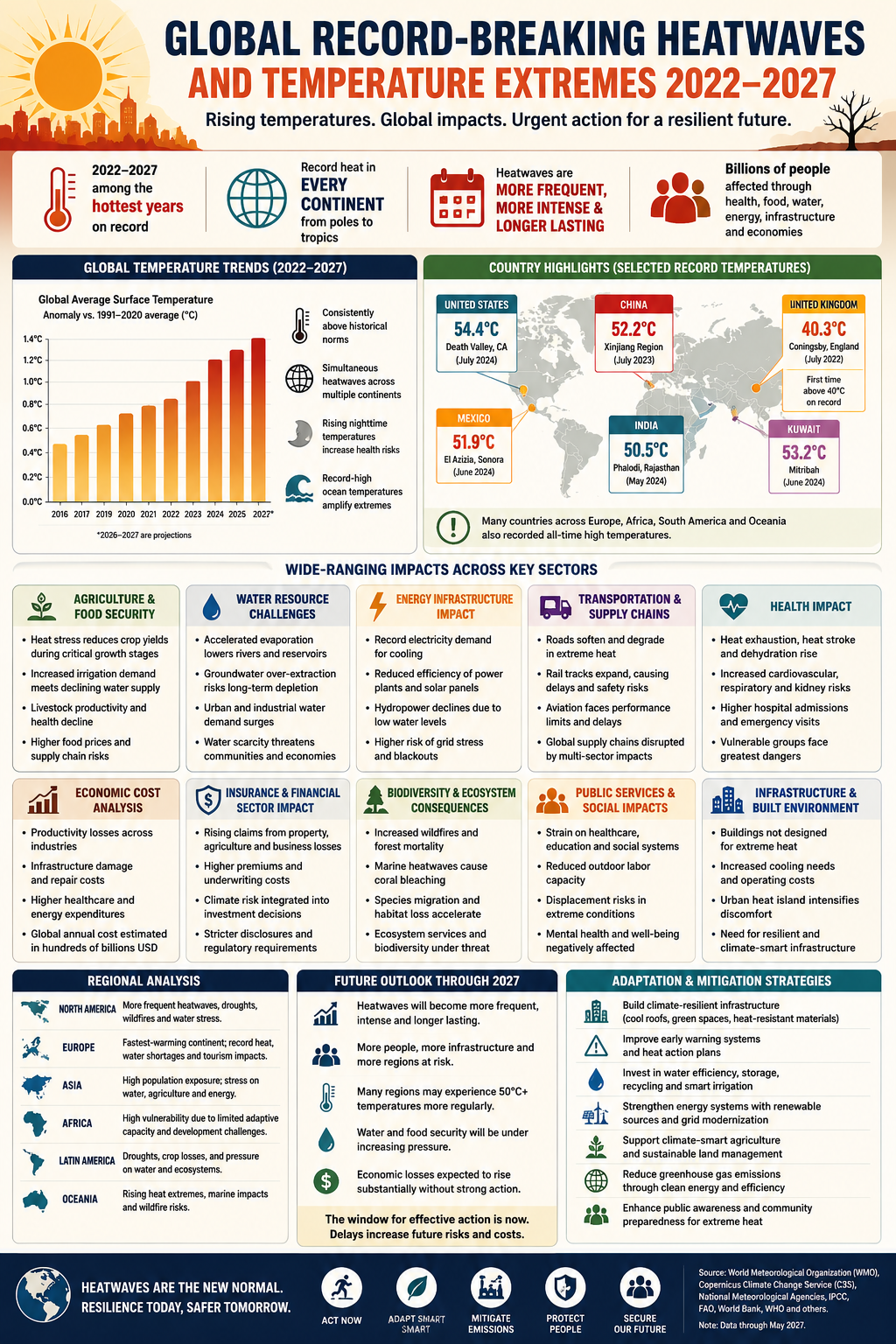
The period between 2022 and 2027 has become one of the most remarkable and concerning climate periods in modern recorded history. During these years, countries across every inhabited continent experienced unprecedented temperature extremes that challenged historical climate records and exposed growing vulnerabilities in modern societies. Heatwaves that were once considered rare events became increasingly frequent, longer lasting, and more geographically widespread. From North America and Europe to Asia, Africa, and Oceania, numerous regions either matched or exceeded previous national temperature records, highlighting the accelerating pace of global climate change. Scientists and meteorological agencies have repeatedly pointed out that many of these events would have been highly unlikely without the long-term warming influence of greenhouse gas emissions.
The significance of these heatwaves extends far beyond environmental concerns. Extreme temperatures have increasingly become major economic and societal events capable of disrupting agriculture, reducing labor productivity, damaging infrastructure, increasing healthcare costs, and straining energy systems. Governments have faced growing pressure to improve climate resilience, while businesses have begun incorporating heat-related risks into long-term planning and investment strategies. As the world continues to warm, understanding the drivers, impacts, and future implications of the heatwaves observed between 2022 and 2027 is becoming essential for policymakers, investors, and communities worldwide.
Global Temperature Trends
Global temperature records during the period from 2022 through 2027 demonstrated a continuation and acceleration of the long-term warming trend observed over recent decades. Multiple international climate monitoring organizations reported that several years within this period ranked among the hottest ever recorded since reliable observations began. Global average temperatures consistently exceeded historical baselines, while ocean temperatures reached unprecedented levels in many regions. The warming was not confined to a single continent or season. Instead, unusually high temperatures were observed across diverse geographic regions, reflecting a broad-scale shift in global climate patterns.
One of the most striking developments was the increasing frequency of simultaneous heatwaves occurring across multiple continents. Historically, major heatwaves tended to affect isolated regions at different times. However, during the 2022–2027 period, Europe, Asia, North America, and South America frequently experienced extreme heat events simultaneously. This phenomenon amplified the overall impact because multiple agricultural regions, energy systems, and transportation networks were under stress at the same time. Another significant trend was the increase in nighttime temperatures. Warmer nights reduce the body's ability to recover from daytime heat and increase the likelihood of heat-related illnesses and fatalities. Urban areas were particularly vulnerable because concrete, asphalt, and buildings retain heat and release it slowly after sunset, creating what scientists refer to as the urban heat island effect.
Country-by-Country Heatwave Analysis
The years between 2022 and 2027 witnessed record-breaking temperatures in numerous countries, highlighting the truly global nature of the climate challenge. China recorded temperatures above 52°C in the Xinjiang region, marking one of the highest temperatures ever measured in Asia. The heatwave persisted for weeks, placing immense pressure on electricity grids, reducing hydropower generation, and creating operational challenges for manufacturing facilities. Given China's critical role in global manufacturing supply chains, the consequences of these disruptions extended well beyond national borders and affected international trade and production networks.
Mexico also experienced unprecedented heat, with temperatures approaching 52°C in certain regions. The extreme conditions intensified droughts, reduced reservoir levels, and strained water resources already under pressure from growing demand. Agricultural producers faced significant challenges as crops struggled under prolonged heat stress and limited water availability. Similar patterns emerged across the United States, where states such as Texas, Arizona, Nevada, and California experienced prolonged periods of dangerous heat. In Europe, countries including Spain, Italy, Greece, France, Germany, and the United Kingdom recorded historic temperature extremes. The United Kingdom's first-ever recorded temperature above 40°C served as a symbolic milestone demonstrating how climate thresholds once considered impossible are now being crossed. India experienced recurring heatwaves affecting millions of people, while Middle Eastern countries continued to register some of the highest temperatures observed anywhere on Earth.
Climate Science Behind Heatwaves
The scientific understanding of heatwaves has evolved considerably over the past two decades. Heatwaves typically occur when persistent high-pressure systems become established over a region, trapping warm air and preventing cooler weather systems from moving through. Under normal circumstances, weather patterns shift regularly, allowing temperatures to fluctuate. However, climate change is increasing the likelihood that these high-pressure systems become more intense and remain in place for longer periods. As global temperatures rise, the baseline from which heatwaves develop also increases, meaning that heat events are becoming hotter than they would have been in the past.
Greenhouse gases such as carbon dioxide, methane, and nitrous oxide play a central role in this process. These gases trap heat within the Earth's atmosphere, creating an enhanced greenhouse effect that raises average global temperatures. Even a relatively small increase in average temperature can significantly increase the probability of extreme heat events. Climate attribution studies conducted following major heatwaves have repeatedly concluded that human-induced climate change substantially increased both the intensity and likelihood of these events. In addition, changing atmospheric circulation patterns, declining soil moisture, and warmer ocean temperatures contribute to the persistence and severity of heatwaves. Together, these factors create conditions that favor more frequent and more damaging temperature extremes.
Health Impact Assessment
Extreme heat has become one of the deadliest weather-related hazards globally. Unlike hurricanes, floods, or earthquakes, heatwaves often develop gradually and may receive less media attention, yet they can cause substantial mortality and widespread health impacts. High temperatures place significant strain on the human body, particularly when accompanied by high humidity levels. The body's natural cooling mechanisms become less effective, increasing the risk of dehydration, heat exhaustion, and heat stroke. If untreated, severe heat-related illnesses can lead to organ failure and death.
The health impacts are especially severe among vulnerable populations. Elderly individuals, young children, outdoor workers, and people with chronic medical conditions face the highest risks. Hospitals often report sharp increases in emergency admissions during major heat events, including cases involving cardiovascular complications, respiratory illnesses, kidney problems, and heat-related injuries. Research suggests that thousands of excess deaths occur during severe heatwaves each year, even in developed countries with advanced healthcare systems. Beyond immediate physical health effects, prolonged exposure to extreme heat can also affect mental health, sleep quality, workplace productivity, and overall quality of life. As heatwaves become more common, public health experts increasingly view extreme heat as one of the most significant climate-related threats facing human populations.
Agriculture and Food Security Risks
Agriculture is among the sectors most directly exposed to rising temperatures and prolonged heatwaves. Crop productivity depends heavily on specific temperature ranges during planting, flowering, pollination, and harvesting stages. When temperatures exceed these biological thresholds, plant growth slows, water demand increases, and yields decline. The heatwaves observed between 2022 and 2027 demonstrated how vulnerable global food production systems remain to climatic extremes. Major agricultural regions across North America, Europe, Asia, and Latin America experienced periods of intense heat that coincided with critical crop development stages, leading to reduced productivity and concerns regarding global food security.
One of the most significant challenges associated with extreme heat is accelerated soil moisture loss. Higher temperatures increase evaporation rates from both soil and plant surfaces, causing crops to require substantially more water. In regions already facing drought conditions, farmers often struggle to meet irrigation requirements. Wheat, corn, rice, soybean, and vegetable crops have all shown measurable declines in productivity when exposed to sustained heat stress. Even where irrigation infrastructure exists, water shortages and declining reservoir levels can limit the ability of producers to compensate for rainfall deficits. Consequently, many agricultural regions have experienced lower yields despite technological advances in farming practices.
Livestock production is similarly affected. Heat stress can reduce feed intake, lower milk production, decrease fertility rates, and increase disease susceptibility among animals. Dairy cattle, poultry, and swine are particularly sensitive to elevated temperatures. During major heatwaves, livestock mortality rates can rise significantly, creating direct economic losses for producers. The cumulative impact of these agricultural disruptions extends beyond individual farms and influences food availability, commodity prices, international trade flows, and household food affordability. As heatwaves become more frequent, ensuring food system resilience is expected to become a central policy priority for governments worldwide.
Water Resource Challenges
Water availability represents one of the most critical vulnerabilities associated with rising temperatures. Heatwaves significantly increase evaporation from lakes, reservoirs, rivers, and soils, reducing available freshwater supplies precisely when demand is at its highest. Between 2022 and 2027, numerous regions experienced concurrent heatwaves and droughts, creating severe water stress for agricultural, industrial, and residential users. The combination of reduced precipitation and elevated temperatures intensified competition for limited water resources and exposed weaknesses in existing water management systems.
Reservoir levels declined substantially in several countries during this period. Hydrological systems that historically provided reliable water supplies faced unprecedented strain as inflows decreased and evaporation accelerated. Groundwater resources were increasingly relied upon to compensate for surface water shortages, raising concerns regarding long-term sustainability. Excessive groundwater extraction can lead to aquifer depletion, land subsidence, and deterioration of water quality, creating challenges that persist long after a heatwave ends.
Urban water systems have also faced growing pressure. Population growth, industrial expansion, and increasing cooling demand contribute to higher water consumption during extreme heat events. Cities in drought-prone regions have implemented restrictions on water use, invested in desalination facilities, and expanded wastewater recycling programs to improve resilience. Climate experts increasingly view water security as one of the defining challenges of the coming decades. As global temperatures continue to rise, integrated water resource management strategies will become essential for supporting economic growth, agricultural productivity, and public health.
Energy Infrastructure Impact
The relationship between heatwaves and energy systems has become increasingly important as temperatures continue to rise. Extreme heat drives substantial increases in electricity demand due to widespread use of air conditioning and cooling technologies. During major heat events, energy consumption often reaches record levels as households, businesses, and public institutions attempt to maintain safe indoor temperatures. This surge in demand places considerable pressure on electricity grids and increases the risk of power outages.
At the same time, many forms of power generation become less efficient under extreme heat conditions. Thermal power plants rely on cooling systems that may struggle when water temperatures are elevated. Hydropower generation can decline significantly during drought periods due to reduced river flows and lower reservoir levels. Even solar panels experience modest efficiency losses at very high temperatures. These simultaneous pressures create a challenging environment for utilities attempting to balance supply and demand during heat emergencies.
Transmission and distribution infrastructure is also vulnerable. High temperatures can reduce the carrying capacity of transmission lines, accelerate equipment degradation, and increase maintenance requirements. In some regions, electricity providers have implemented rolling blackouts to prevent widespread grid failures during extreme demand periods. These disruptions can have cascading effects on healthcare facilities, manufacturing operations, transportation systems, and digital infrastructure. As a result, energy sector resilience is increasingly becoming a cornerstone of climate adaptation planning.
Transportation and Supply Chain Disruptions
Transportation infrastructure was largely designed using historical climate conditions as a reference. As temperatures exceed previous design thresholds, transportation networks face increasing risks of disruption and damage. Roads constructed with asphalt materials can soften and deform under prolonged heat exposure, leading to rutting, cracking, and reduced operational performance. Maintenance costs often rise significantly following major heatwaves, creating additional burdens for public infrastructure agencies.
Railway systems are particularly sensitive to extreme temperatures. Steel rails expand when heated, increasing the risk of track buckling and operational safety concerns. Rail operators frequently impose speed restrictions during heatwaves to reduce accident risks, resulting in delays and reduced network efficiency. Airports are also affected because hot air is less dense than cooler air, reducing aircraft lift capacity and occasionally requiring operational adjustments. In extreme cases, flight delays and cancellations can occur due to temperature-related constraints.
Supply chains face broader disruptions when transportation systems operate below normal capacity. Heatwaves can affect warehousing operations, logistics centers, and manufacturing facilities simultaneously. Agricultural supply chains are especially vulnerable because many food products require temperature-controlled storage and transportation. The globalized nature of modern commerce means that climate-related disruptions in one region can quickly affect production schedules and inventory availability elsewhere. Consequently, businesses are increasingly incorporating climate resilience measures into supply chain planning and risk management frameworks.
Economic Cost Analysis
The economic consequences of heatwaves have expanded considerably in recent years. What were once viewed primarily as environmental events are now recognized as significant economic shocks capable of affecting national productivity and long-term growth. Direct costs arise from infrastructure damage, agricultural losses, increased healthcare expenditures, emergency response efforts, and elevated energy consumption. Indirect costs include reduced labor productivity, supply chain disruptions, business interruptions, and lower consumer spending in affected regions.
Labor productivity losses represent one of the largest economic impacts associated with extreme heat. Outdoor industries such as construction, agriculture, mining, and transportation experience significant declines in worker efficiency as temperatures rise. In many cases, work schedules must be adjusted or suspended entirely to protect employee safety. Indoor workplaces without adequate cooling systems may also experience reduced productivity. Research suggests that rising temperatures could result in substantial reductions in annual working hours across many regions by the end of the decade.
Tourism industries face mixed effects. While some destinations benefit from warmer conditions, excessive heat can discourage travel, reduce outdoor recreation, and negatively affect visitor experiences. Insurance claims, infrastructure repairs, and healthcare expenditures further contribute to the overall economic burden. Economists increasingly estimate that climate-related heat impacts represent hundreds of billions of dollars in annual global losses, underscoring the growing financial significance of extreme temperature events.
Insurance and Financial Sector Impact
The insurance industry sits at the forefront of climate risk assessment because insurers directly absorb many of the financial losses associated with extreme weather events. As heatwaves become more frequent and severe, insurance providers face rising claims related to property damage, agricultural losses, business interruption, health impacts, and infrastructure failures. This trend is prompting insurers to reevaluate risk models and adjust pricing structures to reflect changing climate realities.
Financial institutions are also increasingly incorporating climate risk into investment decisions. Investors recognize that sectors such as real estate, agriculture, utilities, transportation, and manufacturing may face heightened exposure to extreme heat. Companies operating in vulnerable regions are under growing pressure to disclose climate-related risks and demonstrate resilience strategies. Regulatory bodies in many jurisdictions have introduced climate disclosure requirements to improve transparency and support informed investment decisions.
The broader financial sector recognizes that climate-related risks can influence asset valuations, lending practices, and long-term economic stability. Heatwaves can affect corporate earnings, reduce productivity, and increase operational costs, all of which have implications for financial performance. Consequently, climate resilience is becoming an important consideration for both private and public sector investment planning.
Biodiversity and Ecosystem Consequences
The ecological consequences of heatwaves extend far beyond human systems. Natural ecosystems have evolved under relatively stable climatic conditions, and rapid increases in temperature can disrupt ecological processes at multiple levels. Forests, grasslands, wetlands, rivers, and marine environments have all experienced increasing stress due to prolonged periods of extreme heat.
Forests are particularly vulnerable because elevated temperatures increase wildfire risk and accelerate moisture loss. Drought-stressed trees become more susceptible to pests, diseases, and mortality. Large-scale forest losses can reduce biodiversity, release stored carbon into the atmosphere, and diminish ecosystem services such as water regulation and soil stabilization. Heatwaves have contributed to record-breaking wildfire seasons in several regions during the 2022–2027 period.
Marine ecosystems are also experiencing profound impacts. Rising ocean temperatures contribute to marine heatwaves, coral bleaching events, and changes in species distribution. Fish populations may migrate toward cooler waters, affecting fisheries and coastal economies. Many species struggle to adapt quickly enough to rapidly changing environmental conditions, increasing extinction risks for vulnerable populations. Biodiversity loss resulting from heat-related ecosystem stress represents one of the most significant long-term consequences of climate change.
Regional Analysis
The impacts of heatwaves vary considerably across regions due to differences in climate, economic structure, population density, and adaptive capacity. North America experienced recurring heatwaves that affected agriculture, energy systems, and public health. The western United States and parts of Canada faced persistent drought conditions that amplified heat-related risks and increased wildfire activity.
Europe emerged as one of the fastest-warming regions globally. Southern European countries experienced repeated heatwaves that contributed to water shortages, agricultural losses, and tourism disruptions. Northern and Central European nations also encountered unprecedented temperatures, highlighting the widespread nature of climate change impacts across the continent.
Asia faces particularly significant challenges due to its large population and rapidly growing urban centers. Countries such as China and India experienced major heatwaves that strained infrastructure and affected millions of people. The Middle East continues to record some of the highest temperatures globally, while Southeast Asia faces growing risks associated with humidity and heat stress. Africa remains highly vulnerable due to limited adaptive capacity in many regions, while Latin America continues to confront challenges related to drought, water scarcity, and agricultural productivity.
Future Outlook Through 2027
Climate models consistently indicate that the trends observed between 2022 and 2027 are likely to continue. Future heatwaves are expected to become more frequent, more intense, and longer lasting. Population growth, urbanization, and continued warming will increase the number of people exposed to dangerous temperatures. Regions that historically experienced occasional heat extremes may begin facing such conditions on a regular basis.
Urban environments will remain a major focus of concern due to the concentration of population, infrastructure, and economic activity. The urban heat island effect is expected to amplify temperature increases in many cities, increasing cooling demand and public health risks. Agricultural regions may face growing challenges associated with water scarcity and declining productivity, while energy systems will require substantial investment to accommodate rising demand and improve resilience.
The economic implications of future heatwaves are likely to become increasingly significant. Businesses, governments, and investors are expected to devote greater resources toward climate adaptation and risk management. Heat resilience will become a critical component of infrastructure planning, public policy, and corporate strategy.
Adaptation and Mitigation Strategies
Addressing the challenges posed by extreme heat requires a combination of adaptation and mitigation measures. Adaptation focuses on reducing vulnerability to current and future climate impacts, while mitigation seeks to address the underlying causes of climate change by reducing greenhouse gas emissions. Both approaches are essential for managing long-term risks.
Urban adaptation strategies include expanding green spaces, increasing tree cover, implementing cool roof technologies, and improving building efficiency. These measures can help reduce urban temperatures and improve public comfort. Early warning systems, cooling centers, and public education campaigns have also proven effective in reducing heat-related mortality.
Water management investments are becoming increasingly important. Reservoir expansion, water recycling systems, desalination facilities, and efficient irrigation technologies can help improve resilience in water-stressed regions. In agriculture, the development of heat-tolerant crop varieties and precision farming techniques may help maintain productivity under changing climatic conditions.
Mitigation efforts remain equally important. Expanding renewable energy generation, improving energy efficiency, electrifying transportation systems, and reducing industrial emissions can help slow the pace of global warming. While adaptation can reduce near-term risks, long-term climate stability ultimately depends on reducing greenhouse gas emissions worldwide.
The period between 2022 and 2027 will likely be remembered as a defining chapter in the global climate story. Record-breaking temperatures across multiple continents demonstrated that extreme heat is no longer an isolated or occasional phenomenon. Instead, it has become an increasingly common feature of the modern climate system, affecting economies, ecosystems, and societies around the world.
The impacts observed during these years extended well beyond environmental concerns. Heatwaves disrupted food production, strained water resources, challenged energy systems, damaged infrastructure, reduced labor productivity, increased healthcare costs, and affected biodiversity on a global scale. These consequences revealed the interconnected nature of climate risks and highlighted the importance of proactive adaptation and mitigation efforts.
Looking ahead, the lessons learned from the heatwaves of 2022–2027 will play a critical role in shaping future climate resilience strategies. Governments, businesses, and communities that invest in preparedness, sustainable infrastructure, and emissions reduction will be better positioned to manage future climate challenges. As temperatures continue to rise, building resilience to extreme heat will become one of the most important policy and economic priorities of the coming decades.
Explore Related Weather Intelligence and Climate Technology Market Research Reports
The unprecedented heatwaves and temperature extremes recorded between 2022 and 2027 have highlighted the growing importance of weather intelligence, climate monitoring, forecasting technologies, and environmental risk management solutions. As governments, businesses, transportation operators, agricultural producers, and infrastructure managers adapt to increasingly volatile weather conditions, demand for advanced weather monitoring and forecasting technologies continues to expand worldwide.
For readers interested in understanding the industries helping organizations anticipate, monitor, and respond to extreme weather events, the following market research reports provide detailed insights into emerging technologies, market trends, investment opportunities, and future growth prospects.
Featured Reports:
Global Airport Weather Solutions Market Forecast and Trend Analysis 2026-2033
Global Weather Visualization Software Market Technological Advancements 2026-2033
Global Weather Visualization Market Forecast and Trend Analysis 2026-2033
Global Weather Tracking Software Market Innovation Trends 2026-2033
Global Weather Broadcast Software Market Forecast and Trend Analysis 2026-2033
Global Airport Weather Equipment Market Future Outlook 2026-2033
Global Commercial Weather Consulting Services Market Growth Drivers and Challenges 2026-2033
Global Vehicle-mounted Mobile Weather Station Market Risk Analysis 2026-2033
Global Smart Agricultural Weather Station Market Global Trade Dynamics 2026-2033
Global Portable Automatic Weather Stations Market Investment Landscape 2026-2033
These reports examine the technologies and services that support modern weather forecasting, climate risk assessment, environmental monitoring, aviation safety, agricultural planning, emergency preparedness, and infrastructure resilience. They provide comprehensive analysis of market size, growth forecasts, competitive developments, technological innovations, regional opportunities, and strategic trends shaping the future of weather intelligence through 2033.
As climate variability and extreme weather events become increasingly important economic and operational considerations, these studies offer valuable insights into the solutions enabling businesses, governments, and communities to make more informed, weather-driven decisions in a rapidly changing world.
最近のブログ
Parabolic Trough Collector Market Outlook Through 2035
Railway Propulsion Systems Market
Global Mental Health Outlook 2026-2030
The Next Five Years of Digital Innovation, AI Governance, and Europe's Competitive Future (2026
EU Digital Protection Index 2025: Public Confidence, Privacy and AI Governance
Public Concern About AI-Generated News Remains Limited Despite Rapid AI Adoption
Asia Gains Ground in Global Travel Demand: How the Global Tourism Map Is Being Redrawn Through
Housing Cost Burden in the EU Continues to Ease Through 2027, Yet Urban Residents Still Face th