
-
Écrivez-nous
- Rapports phares
How the Pandemic Permanently Changed America's Cycling Market and Why Growth Continues Through 2027
Publié le 18 June, 2026
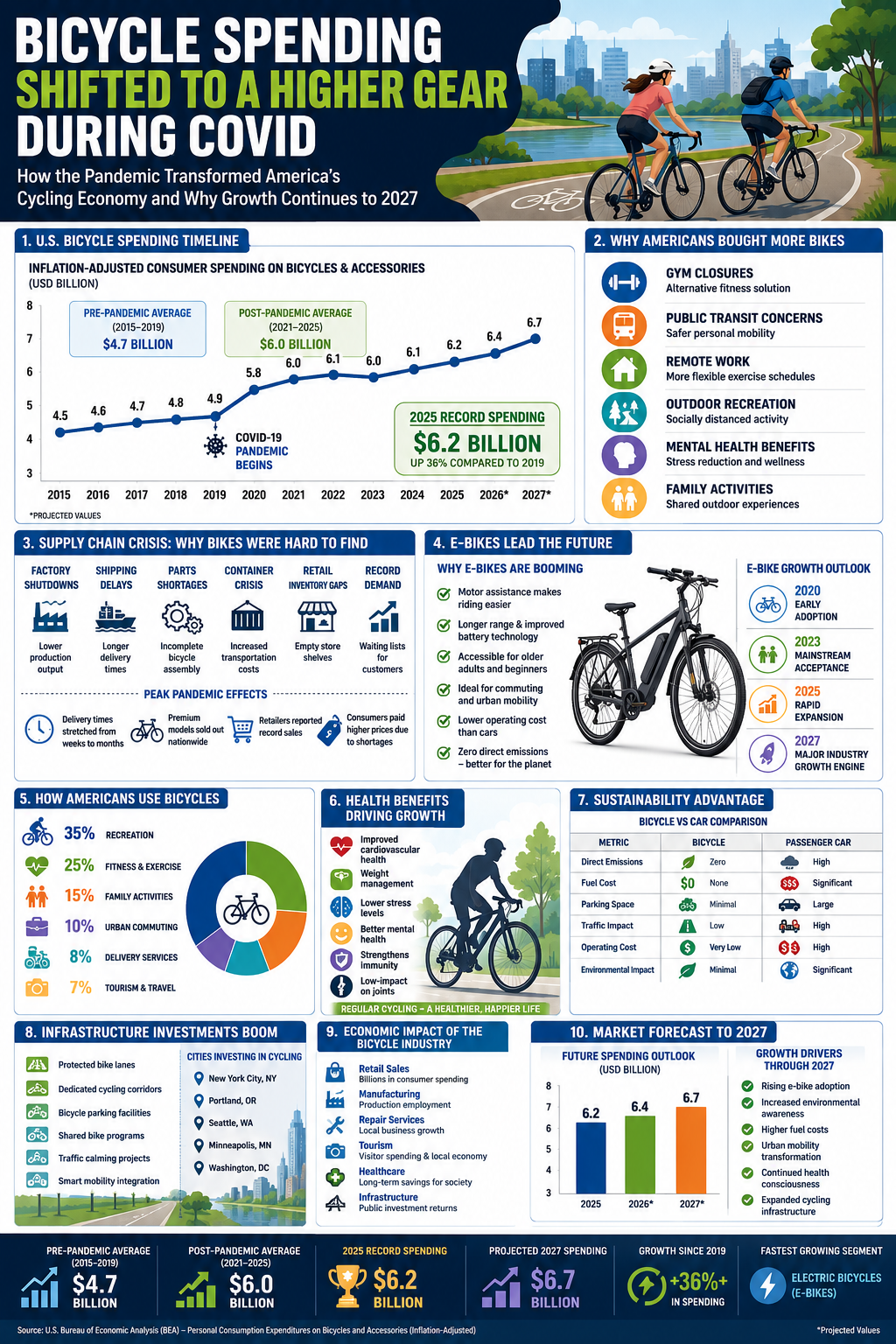
The COVID-19 pandemic reshaped countless aspects of everyday life, altering how people work, travel, exercise, shop, and spend their leisure time. While many industries experienced temporary disruptions or short-term spikes in demand, few sectors witnessed a transformation as dramatic and lasting as the bicycle industry. What began as an emergency response to lockdowns, social distancing measures, and public health concerns ultimately evolved into a long-term shift in consumer behavior that continues to influence spending patterns years later.
For much of modern American history, bicycles have occupied a relatively small position within the nation's transportation ecosystem. Unlike many European countries where cycling serves as a primary mode of daily transportation, the United States has traditionally relied on private automobiles. Suburban development patterns, extensive highway networks, and a strong cultural preference for personal vehicles created an environment where bicycles were often viewed as recreational products rather than practical transportation tools.
When the pandemic arrived in 2020, however, these long-standing habits were challenged. Millions of Americans suddenly faced limited transportation options, closed fitness facilities, and restrictions on social interaction. Bicycles emerged as an ideal solution, offering a safe, affordable, healthy, and socially distanced means of exercise and mobility. Demand surged across virtually every category, from children's bicycles and mountain bikes to premium road bikes and electric bicycles.
What initially appeared to be a temporary boom soon revealed itself to be something much more significant. Even after lockdowns ended and daily life gradually returned to normal, spending on bicycles and accessories remained well above pre-pandemic levels. According to inflation-adjusted figures from the U.S. Bureau of Economic Analysis, Americans spent a record $6.2 billion on bicycles and accessories in 2025, representing a 36 percent increase compared with 2019 levels. Between 2021 and 2025, average annual spending reached approximately $6.0 billion, substantially higher than the $4.7 billion average recorded between 2015 and 2019.
As the market moves through 2026 and into 2027, the bicycle industry continues to benefit from powerful structural trends including growing health consciousness, increasing environmental awareness, investments in cycling infrastructure, and the rapid expansion of the electric bicycle segment. These developments suggest that the pandemic did not simply create a temporary surge in bicycle demand. Instead, it accelerated a broader transformation in American mobility and consumer behavior that is likely to shape the industry for years to come.
Cycling in America Before the Pandemic
To appreciate the significance of the post-pandemic bicycle boom, it is important to understand the state of the U.S. cycling market before COVID-19 emerged. For decades, bicycles occupied a relatively niche position within American transportation culture. While millions of Americans owned bicycles, their use was largely concentrated in recreational riding, fitness activities, organized sports, and occasional commuting in select urban areas.
The dominance of automobiles in the United States has deep historical roots. Following World War II, federal investment in highway infrastructure and suburban expansion fundamentally reshaped the nation's transportation landscape. Communities were increasingly designed around cars rather than pedestrians or cyclists. Residential neighborhoods, shopping centers, schools, and workplaces often became separated by distances that made cycling impractical for many individuals.
As a result, automobile ownership became nearly essential for participation in everyday life. Public transportation systems remained limited outside major metropolitan areas, and bicycle infrastructure received comparatively little investment. Dedicated bike lanes, protected cycling corridors, and secure bicycle parking facilities were often absent in many communities.
Despite these challenges, cycling maintained a strong presence within certain demographic groups. Fitness enthusiasts embraced road cycling as a form of endurance training. Mountain biking developed a dedicated following, particularly in regions with access to trails and outdoor recreation opportunities. Families continued to purchase bicycles for children, and urban cycling communities slowly expanded in cities such as Portland, Minneapolis, Seattle, San Francisco, and Washington D.C.
Throughout the years leading up to the pandemic, bicycle spending remained relatively stable. Growth was driven primarily by incremental improvements in product technology, increasing health awareness, and rising interest in outdoor recreation. Industry participants generally expected steady but modest expansion rather than dramatic acceleration. Few market observers anticipated the unprecedented surge in demand that would soon reshape the industry.
The Pandemic Creates a Bicycle Boom
The arrival of COVID-19 in early 2020 dramatically altered consumer behavior across virtually every sector of the economy. As governments implemented lockdown measures and public health restrictions, millions of Americans found themselves searching for alternatives to activities and services that had suddenly become unavailable.
Fitness centers closed their doors. Organized sports competitions were canceled. Entertainment venues suspended operations. Public transportation systems reduced service levels and experienced sharp declines in ridership. International travel came to a near standstill. Individuals and families spent far more time at home than they had in previous years.
Within this environment, bicycles emerged as one of the most attractive solutions for maintaining physical activity and mobility. Cycling offered a unique combination of benefits that aligned perfectly with the challenges of the pandemic era. It allowed individuals to exercise outdoors while maintaining social distance. It provided opportunities for stress relief and mental well-being during a period characterized by uncertainty and anxiety. It also offered a practical transportation option that reduced reliance on crowded buses and trains.
The surge in demand was immediate and widespread. Families purchased bicycles as a way to spend time together outdoors. Adults who had not ridden for years rediscovered cycling as a recreational activity. Commuters sought alternatives to public transportation. Fitness enthusiasts turned to cycling as a replacement for gym-based exercise routines.
Bicycle retailers across the country reported extraordinary increases in sales. Inventory that would normally last months disappeared within weeks. Entry-level bicycles, children's models, mountain bikes, hybrid bicycles, and fitness-oriented bicycles became increasingly difficult to find. Demand extended across nearly every category of the market, creating one of the most significant sales booms in the industry's history.
The bicycle industry had never experienced a demand shock of this magnitude. What made the situation particularly remarkable was the speed at which consumer behavior changed. Within a matter of months, bicycles transitioned from being a secondary recreational product for many households to becoming an essential tool for transportation, exercise, and outdoor recreation.
Supply Chain Challenges and Product Shortages
The rapid increase in demand coincided with severe disruptions to global supply chains, creating a perfect storm for manufacturers and retailers. The bicycle industry depends heavily on international production networks, with many components manufactured in countries such as China, Taiwan, Vietnam, and other parts of Asia.
As the pandemic spread globally, manufacturing facilities faced temporary shutdowns, labor shortages, health restrictions, and operational disruptions. Shipping networks experienced unprecedented congestion. Container shortages, port delays, and transportation bottlenecks created challenges across numerous industries, including bicycles.
The combination of soaring demand and constrained supply produced significant shortages throughout the market. Retailers struggled to replenish inventory as quickly as products were sold. Customers frequently encountered empty showroom floors and limited product availability. Waiting lists became common for popular bicycle models, and delivery times stretched from weeks to several months.
Premium bicycles and electric bicycles were particularly affected. Consumers often placed orders months in advance without knowing exactly when their products would arrive. Manufacturers increased production wherever possible, but shortages of critical components such as drivetrains, brakes, wheels, tires, and electronic systems limited their ability to meet demand.
These shortages had important economic consequences. Prices increased as demand outpaced supply. Consumers became more willing to purchase available inventory regardless of model specifications or price points. In many cases, buyers upgraded to more expensive products simply because lower-priced alternatives were unavailable.
The supply chain crisis highlighted both the strengths and vulnerabilities of the modern bicycle industry. While global manufacturing networks enabled large-scale production, they also exposed the industry to disruptions that affected virtually every stage of the supply chain. The experience prompted many manufacturers and retailers to reevaluate sourcing strategies and inventory management practices in the years that followed.
Record Bicycle Spending and Market Expansion
The financial impact of the bicycle boom became increasingly apparent as spending data emerged over subsequent years. Consumer expenditures on bicycles and accessories rose sharply during the pandemic and remained elevated long after restrictions were lifted.
Spending growth extended beyond bicycle purchases themselves. Consumers invested heavily in helmets, locks, lighting systems, maintenance tools, cycling apparel, smartphone mounts, bicycle racks, and various performance-enhancing accessories. New cyclists often required complete equipment packages, creating additional revenue opportunities for retailers.
Many consumers who initially purchased entry-level bicycles later upgraded to higher-end models as their interest in cycling grew. This created a secondary wave of demand that supported continued industry growth. Riders who discovered a passion for cycling frequently invested in improved equipment, specialized clothing, advanced technology, and maintenance services.
The electric bicycle segment emerged as one of the strongest contributors to spending growth. Because e-bikes typically carry higher average selling prices than traditional bicycles, their increasing popularity significantly boosted industry revenues. Consumers increasingly viewed electric bicycles as practical transportation solutions rather than luxury recreational products.
By 2025, inflation-adjusted spending on bicycles and accessories reached approximately $6.2 billion, representing the highest level ever recorded. More importantly, spending levels remained significantly above the pre-pandemic average, demonstrating that the industry had established a new baseline for consumer demand.
The Rise of Electric Bicycles
One of the most transformative developments in the bicycle industry has been the rapid adoption of electric bicycles. Although e-bikes existed before the pandemic, their popularity accelerated dramatically during the years that followed.
Electric bicycles address several barriers that have historically limited cycling participation. Traditional bicycles require physical effort that can discourage some individuals, particularly older adults, less experienced riders, or commuters traveling longer distances. E-bikes reduce these challenges by providing motor-assisted propulsion that makes cycling easier and more accessible.
Modern electric bicycles offer numerous advantages. Improved battery technology has increased riding range while reducing charging times. Advanced motor systems provide smooth assistance without compromising the overall cycling experience. Many models incorporate digital displays, smartphone connectivity, navigation systems, and integrated security features.
The appeal of electric bicycles extends across multiple demographic groups. Older adults appreciate the ability to continue cycling comfortably. Urban commuters value the opportunity to travel efficiently without arriving at work exhausted. Recreational riders enjoy exploring longer routes and more challenging terrain.
Businesses have also embraced e-bikes. Delivery services, food transportation companies, and urban logistics operators increasingly utilize electric bicycles as cost-effective and environmentally friendly alternatives to motor vehicles.
As battery technology continues to improve and prices gradually become more affordable, e-bikes are expected to remain one of the fastest-growing segments of the bicycle market through 2027 and beyond.
Health and Wellness Drive Long-Term Demand
A major reason the bicycle boom has endured is the growing emphasis on health and wellness among consumers. The pandemic heightened awareness of physical fitness and preventive healthcare, encouraging individuals to adopt healthier lifestyles.
Cycling provides a highly effective form of cardiovascular exercise that can be sustained throughout life. Unlike some high-impact activities, cycling places relatively little stress on joints while delivering significant fitness benefits. Regular cycling supports heart health, weight management, muscle development, and mental well-being.
The mental health benefits of cycling became particularly evident during the pandemic. Outdoor exercise helped many individuals manage stress, anxiety, and social isolation. These positive experiences encouraged long-term participation even after restrictions ended.
Employers have also recognized the value of active lifestyles. Corporate wellness programs increasingly promote cycling through incentives, reimbursement programs, and bike-to-work initiatives. Such efforts contribute to sustained demand by encouraging employees to incorporate cycling into their daily routines.
Healthcare professionals frequently recommend cycling as a safe and effective exercise option for individuals of varying ages and fitness levels. As concerns regarding obesity, cardiovascular disease, and sedentary lifestyles continue to grow, cycling is likely to remain an attractive solution for health-conscious consumers.
Sustainability and Environmental Awareness
Environmental concerns represent another important driver of bicycle market growth. Transportation remains one of the largest sources of greenhouse gas emissions globally, prompting governments, businesses, and consumers to seek more sustainable mobility solutions.
Bicycles offer significant environmental advantages compared with motor vehicles. They produce no direct emissions, require minimal energy resources, occupy less space, and contribute less to traffic congestion. These benefits align closely with broader sustainability objectives pursued by many cities and governments.
Consumers are increasingly incorporating environmental considerations into purchasing decisions. Younger generations, in particular, often view cycling as part of a sustainable lifestyle that reduces environmental impact while supporting personal health.
Corporate sustainability initiatives have also contributed to cycling adoption. Many organizations encourage employees to utilize active transportation options as part of broader environmental programs. Governments increasingly support cycling through infrastructure investments, public awareness campaigns, and incentive programs.
As climate-related concerns continue to influence policy and consumer behavior through 2027, bicycles are expected to play an increasingly important role within sustainable transportation strategies.
Infrastructure Investments Support Growth
The expansion of cycling infrastructure has been a critical factor supporting long-term market growth. During and after the pandemic, many cities accelerated investments in bicycle-friendly transportation networks.
Protected bike lanes, dedicated cycling corridors, improved intersections, bicycle parking facilities, and traffic-calming measures have made cycling safer and more accessible. These improvements help reduce one of the most significant barriers to cycling adoption: concerns about safety.
Urban planners increasingly recognize the economic and environmental benefits associated with active transportation. Bicycle infrastructure often requires lower investment than major road expansion projects while delivering positive outcomes related to public health, congestion reduction, and environmental sustainability.
Cities throughout North America continue to expand cycling networks as part of broader transportation modernization efforts. These investments not only support existing cyclists but also encourage new participants who may have previously been reluctant to ride in traffic.
Infrastructure development is expected to remain a key growth driver through 2027 as municipalities continue prioritizing sustainable mobility solutions.
Bicycle Market Outlook Through 2027
Looking ahead, the bicycle industry appears well-positioned for continued growth. While the extraordinary expansion witnessed during the pandemic is unlikely to be repeated, several structural trends continue to support positive market fundamentals.
Electric bicycle adoption is expected to accelerate further as technology improves and prices become more accessible. Urbanization, sustainability initiatives, and transportation diversification efforts will continue supporting demand for cycling solutions. Investments in infrastructure are making cycling safer and more practical for a broader segment of the population.
Industry forecasts suggest bicycle-related spending could reach between $6.5 billion and $6.8 billion by 2027 in inflation-adjusted terms. Growth is expected to be driven primarily by premium products, electric bicycles, accessories, and maintenance services rather than basic entry-level bicycle sales.
The market may experience periodic fluctuations due to economic conditions, consumer confidence, and inventory adjustments. However, the long-term trajectory remains positive. The bicycle industry has successfully transitioned from a pandemic-driven boom to a more sustainable growth phase supported by structural changes in consumer behavior.
The COVID-19 pandemic fundamentally transformed the American bicycle market. What began as a practical response to lockdowns, transportation concerns, and fitness challenges evolved into a lasting shift in consumer preferences and spending patterns.
Millions of Americans rediscovered cycling during the pandemic and continued participating long after restrictions ended. The result was a substantial increase in spending on bicycles and accessories, rising from a pre-pandemic average of approximately $4.7 billion annually to record levels exceeding $6 billion.
Several powerful trends continue supporting the market. Health and wellness priorities, environmental awareness, electric bicycle adoption, infrastructure investments, and changing attitudes toward mobility have all contributed to the industry's resilience.
As the market progresses through 2026 and 2027, bicycles are expected to play an increasingly important role within America's transportation and recreation landscape. While automobiles will remain dominant, cycling has secured a stronger position than ever before. The pandemic bicycle boom was not merely a temporary phenomenon. It marked the beginning of a new era in which bicycles are increasingly recognized as practical tools for health, transportation, sustainability, and quality of life.
The evidence is clear. The bicycle industry emerged from the pandemic larger, stronger, and more influential than it was before. Its continued growth through 2027 demonstrates that one of the most unexpected winners of the COVID-19 era has become a permanent fixture of the modern mobility economy.
Explore Related Bicycle and Cycling Industry Market Research Reports
The transformation of America's cycling market extends far beyond bicycle sales alone. As cycling continues to gain momentum as a mode of transportation, recreation, fitness, and sustainable mobility, numerous supporting industries are experiencing significant growth and innovation. From electric bicycles and hydrogen-powered mobility solutions to bicycle maintenance products, drive systems, and bike-sharing infrastructure, the cycling ecosystem continues to evolve rapidly.
For readers interested in exploring the broader business and technology landscape behind the cycling industry's growth, the following market research reports provide valuable insights into emerging trends, market opportunities, competitive developments, and future growth projections.
Featured Reports:
Global Bicycle Chain Degreasing Lubricant Market Key Players and Market Share 2026-2033
Global Electric Bicycle Market Economic and Social Impact 2026-2033
Global Hydrogen Powered Bicycles Market Strategic Planning Insights 2026-2033
Global Bicycle Frame Paint Curing Agent Market Competitive Landscape 2026-2033
Global Bicycle Frame Fenders Market Demand and Supply Dynamics 2026-2033
Global Electric Bicycles and Bike-sharing Systems Market Future Projections 2026-2033
Global Bicycle Mudguard Kit Market Investment Landscape 2026-2033
Global Bicycle Polish Cleaner Market Economic and Social Impact 2026-2033
Global Electric Bicycle Drive System Market Innovation Trends 2026-2033
Global Bicycle Degreasers Market Research and Development Focus 2026-2033
These reports examine critical segments of the modern cycling industry, covering advancements in electric mobility, sustainable transportation technologies, bicycle maintenance solutions, component innovation, consumer preferences, urban mobility trends, and emerging investment opportunities. Each study provides comprehensive market forecasts, competitive analysis, regional outlooks, and strategic insights through 2033.
For organizations, investors, manufacturers, retailers, and cycling enthusiasts seeking a deeper understanding of the forces shaping the future of cycling, these reports offer valuable perspectives on one of the world's fastest-evolving mobility and recreation industries.
Blogs récents
Parabolic Trough Collector Market Outlook Through 2035
Railway Propulsion Systems Market
Global Mental Health Outlook 2026-2030
The Next Five Years of Digital Innovation, AI Governance, and Europe's Competitive Future (2026
EU Digital Protection Index 2025: Public Confidence, Privacy and AI Governance
Public Concern About AI-Generated News Remains Limited Despite Rapid AI Adoption
Asia Gains Ground in Global Travel Demand: How the Global Tourism Map Is Being Redrawn Through
Housing Cost Burden in the EU Continues to Ease Through 2027, Yet Urban Residents Still Face th